Skip to content



- Bitcoin may break its four-year halving cycle and potentially hit new highs by 2026.
- Market indicators show a local bottom as investors hedge heavily against further downside.
- The Fed’s December 10 rate decision could act as a major catalyst for Bitcoin’s 2026 outlook.
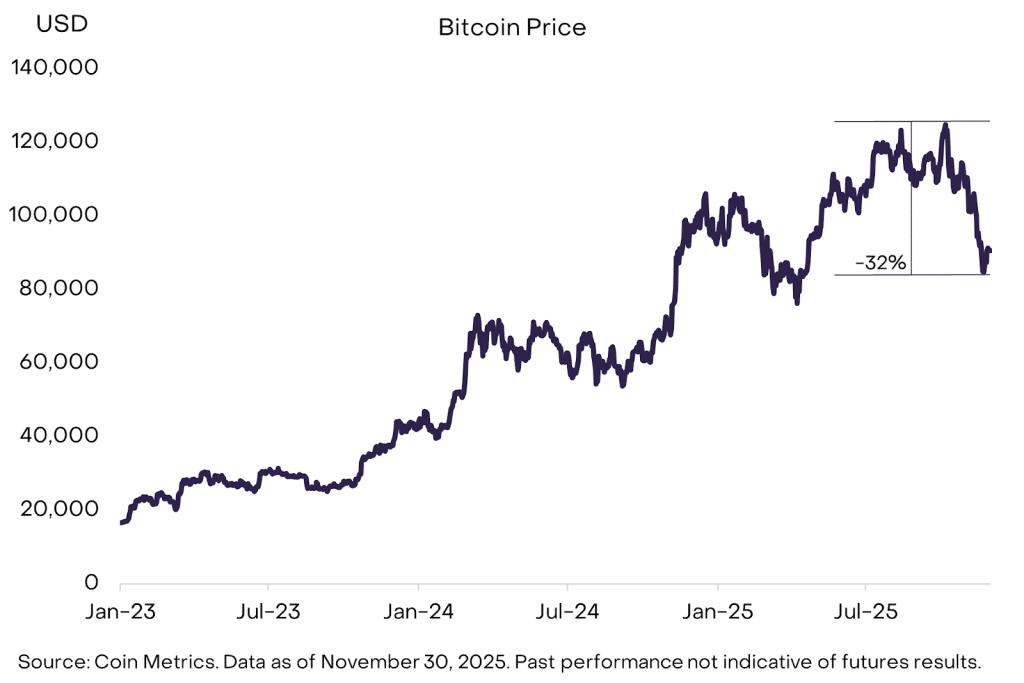
Bitcoin’s recent dip may be nearing its end, with Grayscale suggesting that the cryptocurrency could break its traditional four-year halving cycle. According to the asset management firm, Bitcoin is on track to reach new all-time highs by 2026. Market indicators point to a potential bottom, rather than a prolonged downturn.
Although its fall was 32%, the most recent report by Grayscale indicates that BTC will disrupt the traditional halving trend. The company reckons that Bitcoin might be preparing to experience a price explosion, which could be counterintuitive to the normal four-year pattern.
“Although the outlook is uncertain, we believe the four-year cycle thesis will prove to be incorrect,” Grayscale said, adding that Bitcoin’s price may reach new highs next year.
Source: Research.grayscale.com
Recovery Outlook Hinges on Reversal of Key Market Signals
Bitcoin is exhibiting several indicators that are portraying signs of a local bottom. Its elevated option skew has soared over 4, indicating that investors have overhedged against even more decline.
This implies that the market has already factored in further falls, which gives a possibility of a bottom to recover. The investors are seen to be hedging their interests, which means that the worst is likely to be past.
However, Bitcoin is unstable in terms of its short-term recovery. To enjoy a sustainable recovery, the market indicators will be required to display the reversal of Bitcoin. They include futures open interest, inflows in ETFs, and long-term holder selling. Without these shifts, the market will be inclined to a limitation in its recovery; nevertheless, it began to appear more stable.
Also Read: Grayscale Nears Launch of First U.S. Chainlink ETF Amid Rising Crypto ETF Demand
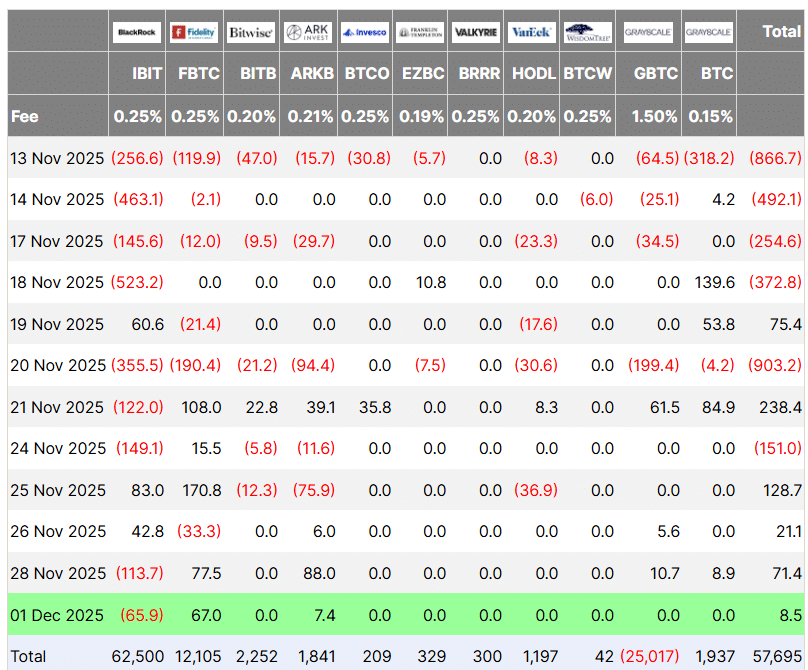
US spot Bitcoin ETFs experienced major outflows in November, amounting to $3.48 billion. This was one of the worst months in the history of these funds. Nonetheless, Bitcoin ETFs have recorded flashes of turnaround, four days of straight flows, including a small amount of $8.5 million on Monday. This may be an indication of gradual re-entry of investor enthusiasm following the recent sell-off.
Source: Farside Investors
Bitcoin Must Reclaim Low-$90,000 Levels to Maintain Market Momentum
To keep the momentum going, Bitcoin should reach the low $90,000s again. An analyst at Nexo, Iliya Kalchev, has observed that Bitcoin should not fall to the support of mid-$80,000. The positioning on the market indicates that the next few weeks will be critical to the price of Bitcoin, not a significant change of conviction.
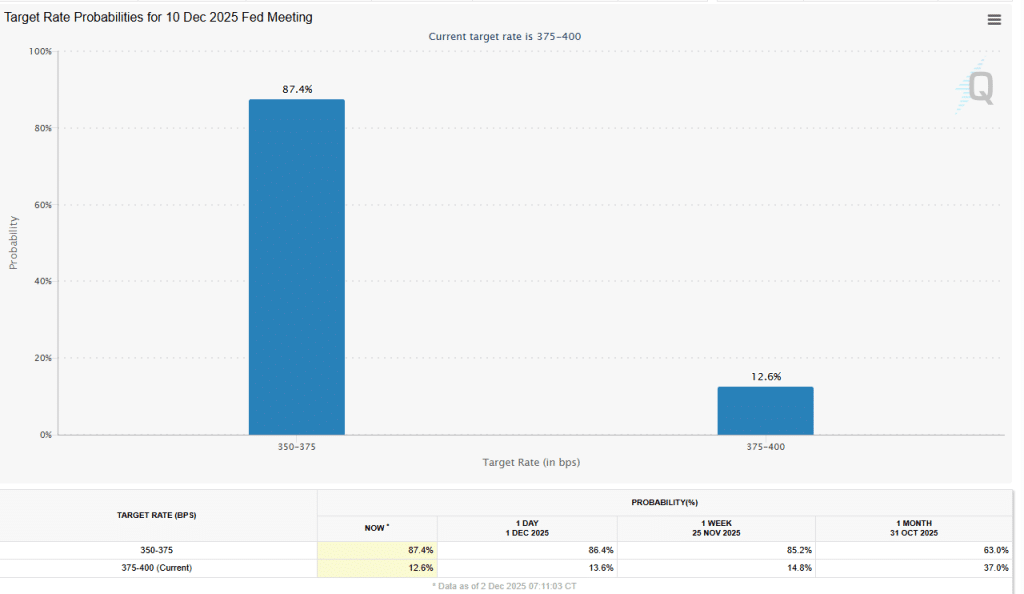
The interest rate announcement on December 10 by the US Federal Reserve may turn out to be the trigger for the advantage of Bitcoin prices in 2026. Markets are putting a price on an 87.4% probability of a 25-basis-point decrease of the rate, according to the CME Group’s FedWatch tool. The rate cut may stabilize the general economy and aid in the recovery of Bitcoin in the next year.
Source: CMEgroup.com
Another factor that Grayscale identified as a driver of the growth of Bitcoin was the Digital Asset Market Structure bill. This potential bill that might stimulate institutional investment might become popular in 2026. Nonetheless, to move the bill forward, crypto should stay a bipartisan concern and should not turn into a divisive topic in US midterm elections.
The Senate leaders have been pushing the bill and aim to pass it in early 2026. This may provide more definitive regulatory frameworks, which may help more institutions adopt Bitcoin and increase its future prospects.
Also Read: Bitcoin Near $80K: Saylor Explains Why Volatility Drives Long-Term Growth