Skip to content



- Brazil’s central bank introduces new crypto regulations, targeting VASPs for compliance.
- Stablecoin transactions are now classified as foreign exchange under Brazil’s new crypto rules.
- New regulations aim to reduce fraud and money laundering in Brazil’s growing crypto market.
The central bank of Brazil has proposed a new regulation on the service providers of digital assets (VASPs). This framework carries anti-money laundering (AML) and counter-terrorism financing guidelines to the increasingly popular cryptocurrency industry in the country. The new actions are a big move towards ensuring the inclusion of virtual assets in the Brazilian financial system and the prevention of illicit endeavors.
The rules, which will be effective beginning in February 2026, would compel VASPs, including brokers, custodians, and intermediaries, to receive pre-authorization by the central bank to operate.
New regulations focus on compliance, governance, internal controls, cybersecurity, and risk management. These steps will position crypto firms with the same supervisory sanctions as traditional banks.
Crypto Transfers with Unauthorized Counterparties Limited to $100,000
The companies will be allowed to comply with the new requirements up to November 2026. Lack of adherence may lead to suspension of operations. The director of the central bank, Gilneu Vivan, emphasized that the rules will minimize the possibility of scams, fraud, and money laundering in the crypto market.
A key aspect of the new rules is how transactions involving stablecoins are classified. Fiat-pegged stablecoin purchases, sales, and exchanges of such coins will now be considered as foreign exchange transactions.
Also Read: Brazil’s Central Bank Moves Forward with Bitcoin Reserve Plans
The same pertains to the transfer and settlement of cryptocurrencies internationally. According to the central bank, transactions with unauthorized counterparties will be restricted to $100,000.
The novel framework arrives when Brazil experiences the growth of stablecoins as a method of payment and transferring funds to other countries. The governments have expressed that stablecoins are engaging in more transactions rather than investing. The central bank wants to minimize illegal transactions by regulating such transactions and increasing market transparency.
Brazil Strengthens Its Crypto Market with New Regulations
This control action follows the regulatory reference for Brazil in 2022 that formed the basis of managing virtual assets. But further regulations were to be introduced by the central bank to be fully implemented. Through these new regulations, Brazil would aim at becoming a digital finance regulation leader in Latin America.
Brazil is already one of the biggest crypto markets around the world. Chainalysis reports that the country will have almost $319 billion in crypto transactions between mid-2024 and mid-2025. This can put Brazil in fifth place in terms of the largest crypto markets in the world, and it represents about a third of overall Latin American crypto markets.
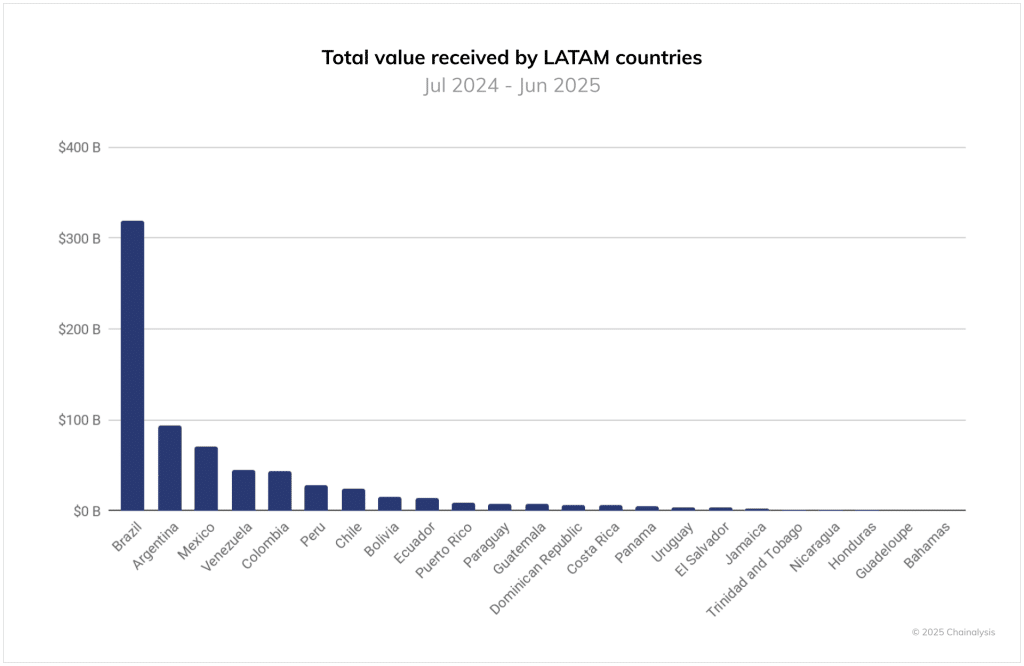
Source: Chainalysis
With the new regulations, the central bank believes that Brazil would boost its digital economy. The new framework will enhance the level of security, transparency, and international-based financial standards. This will likely make the virtual assets more stable and regulated.
With Brazil becoming a big part of the global crypto market, such rules are a significant move in regulating the industry and making sure that digital value is safe and transparent to the Brazilian financial system.
Also Read: Long-Term Bitcoin Holders Reposition Assets as Market Shifts Toward Stability