Skip to content


- Bitcoin’s launch in 2008 triggered a global blockchain revolution.
- Chainlink now bridges traditional finance and decentralized systems.
- The platform sets the foundation for secure, scalable, and compliant onchain finance.
Bitcoin started as a bold idea to create decentralized digital money. Its invention in 2008 introduced a peer-to-peer network that removed intermediaries from transactions. Over time, this idea evolved into an entire blockchain ecosystem, now hosting thousands of digital assets and millions of users. Among the key innovations driving this evolution is Chainlink, which connects blockchains with real-world data.
This is enabling more advanced and reliable smart contracts across the ecosystem. The next advancement was created by Ethereum with the inclusion of programmable smart contracts. The innovation enabled the creation of automated financial transactions without the need for intermediaries.
The technology led to the emergence of the concept of decentralized finance. Which has changed the way value is transferred across the world. However, the emergence of different blockchain platforms made communication between them vital.
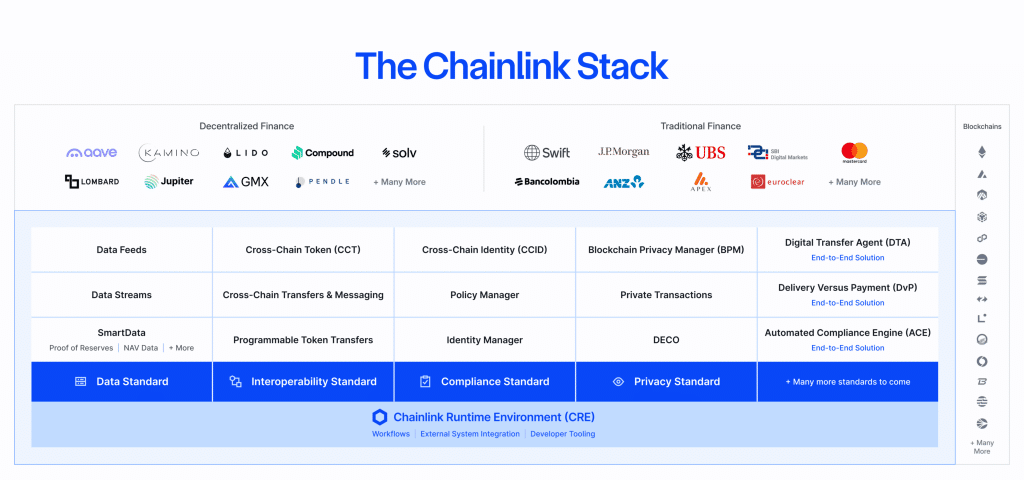
The sector was in need of an integration layer, something that could bring different systems into one secured network. That is how Chainlink emerged, with its standard that links data, assets, and compliance on different blockchain platforms.
Chainlink Powers Web3 with Secure Real-World Data
Chainlink is the backbone of Web3. The oracle network provided by Chainlink is the bridge that gives blockchain access to real-world data in a secure manner. It is allowing smart contracts to run on real-world data, bringing innovation in areas of lending, insurance, and derivatives with decentralized data feeds.
The Chainlink Runtime Environment, or CRE, extends these capabilities by enabling developers to set up complex workflows between onchain and offchain networks. The CRE enables the integration of several different networks, the checking of compliance. And the implementation of privacy solutions into the same process.
Rather, instead of relying on multiples independent solutions. The solutions can easily adopt the unified system that will help reduce the cost, risk, and complexity of technology involved. The design of Chainlink is also reflecting the same trend just seen in the early development of the Internet. Where TCP/IP enabled the connection of unconnected intranets.
Chainlink Gains Ground in Institutional Blockchain Adoption
The adoption of blockchain technology is currently the main priority for financial institutions across the world. Well-established financial giants, including Swift, Mastercard, and J.P. Morgan, are already taking advantage of Chainlink technology in testing the concept of settlements facilitated by tokens on the blockchain platform.
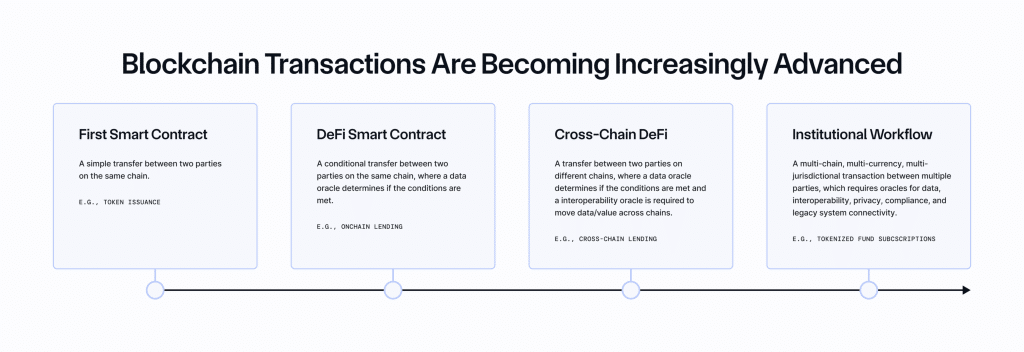
ISO 27001 certification and SOC 2 type 1 compliance show that Chainlink is ready to be used on a massive financial scale. The technology developed is capable of dealing with “tokenized assets, automated settlements, or even privacy-preserving transactions.” Which are necessary aspects for financial or other regulated bodies.
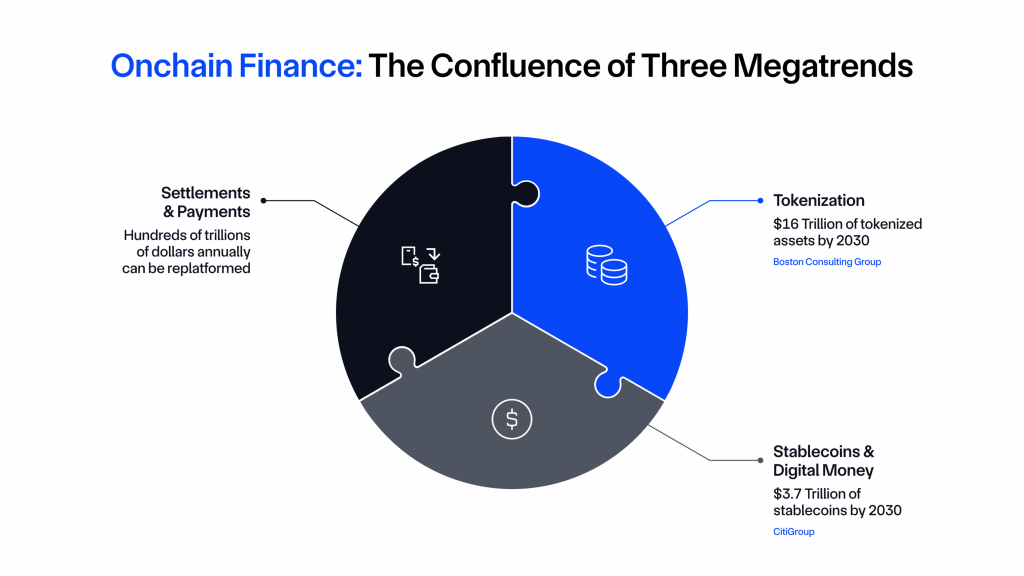
Some estimates show that by the year 2030, the assets that will be tokens may reach up to 16 trillion. With hundreds of trillions going through on-chain transaction platforms, thanks to the chains on which the linking service, Chainlink, operates. Chainlink is more than just a way of connecting different blockchains, because with Chainlink, the financial, technology, and regulatory arenas will be integrated into one system.
Related Reading: Bitcoin ETFs rebound with 240 million inflows after six days of losses