Skip to content


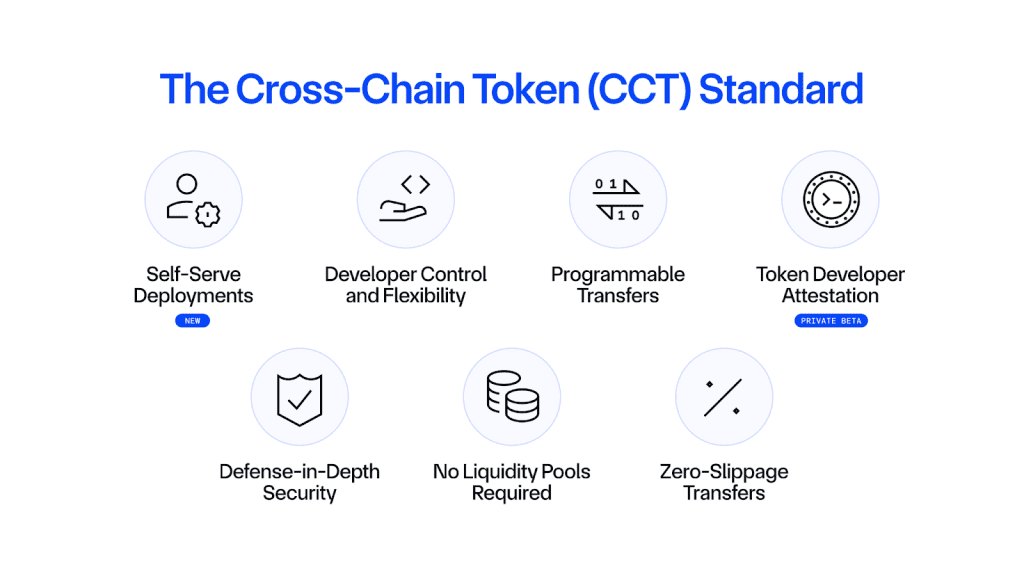
- CCT Feature 4/7 introduces developer attestation to improve cross-chain security.
- Token developers now verify burn or lock actions before token movement begins.
- This adds reliability for stablecoins, real-world asset tokens, and similar use cases.
The latest upgrade to the Chainlink Cross-Chain Token (CCT) standard introduces Developer Attestation, a key feature that boosts token security. This tool allows token developers to confirm whether tokens were properly burned or locked on a source chain before new tokens are released on a destination chain.
It lessens the risk of mistakes or dishonesty while performing token transfers across blockchains. Chainlink’s Cross-Chain Interoperability Protocol (CCIP) involves local developers in verification by providing them with more authority and responsibility. This is particularly significant for such tokens that are issued as stablecoins, tokenized real-world assets, or wrapped assets that have to satisfy stringent compliance as well as security requirements.
Developers can safely secure their ecosystems without giving up management of token contracts or cross-chain activity. The functionality is complementary to CCIP’s automated verification system, providing verification to ensure token movement occurs as intended.
Chainlink Powers Token Flexibility
CCT streamlines token transfers between chains. Developers no longer need to rely on liquidity pools to support tokens across chains. Tokens are either burned or locked up before they are minted. These practices assist to make the overall supply of the token consistent no matter where it goes.
For the developer, there is no requirement to alter token code or have particular templates to draw upon. They are free to issue cross-chain tokens using an easy-to-use interface. The system grants them total freedom to determine rates, control token pools, as well as monitor transfers.
The system is flexible and supports both existing and newly created ERC20-compliant tokens. The CCTs are logic-neutral to enable either the use of pre-audited contracts or custom contracts. The freedom is given to teams to create tokens tailored precisely to their respective use case.
Developer Attestation Enhances the CCT Framework
Developer attestation sits well within the broader CCT paradigm. By doing this, security is enhanced without compromising developer freedom. Each transfer of tokens is still routed via Chainlink’s Decentralized Oracle Network (DON), which has facilitated trillions of dollars’ worth of transactions.
And there is another risk management network where CCIP activity is constantly monitored for abnormalities. Developers introduce an additional final check process to this development. Developers ensure things like burning or locking tokens have been done before tokens are made available somewhere else.
This integration with human monitoring strengthens the confidence of both consumers and developers for cross-chain transactions. The CCT format continues to evolve to address increasing needs of multi-chain ecosystems. Attestations by developers offer an alternative solution for safe, scalable, and efficient transfers across the entire universe of blockchains.
Related Reading: Crypto Correction Incoming: Is Bitcoin About to Follow 2024’s Decline? CryptoQuant Weighs In