Skip to content


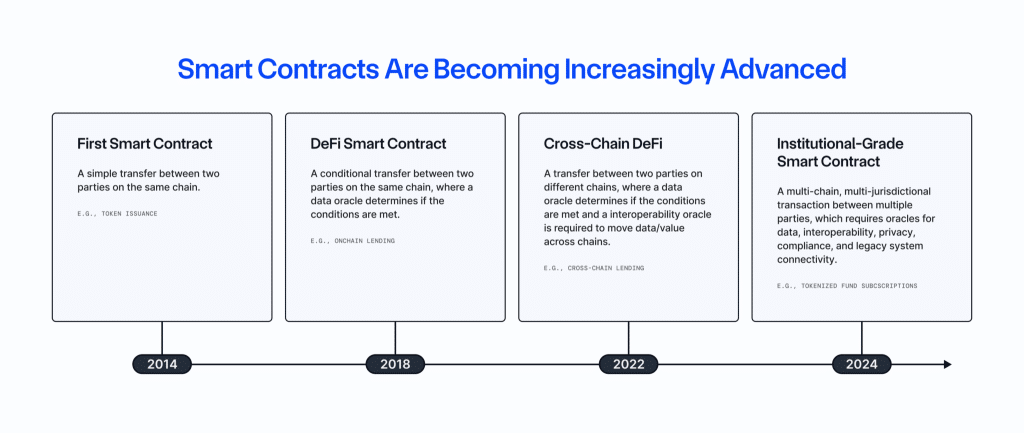
- Smart contracts evolved from simple code to complex financial systems.
- Institutions need stronger links between blockchains and real-world systems.
- CRE aims to unlock the next phase of global on-chain finance.
According to the blog, blockchain development changed forever with the launch of the Ethereum Virtual Machine in 2015, alongside early innovations from Chainlink. Before that moment, developers faced severe limits. Blockchains lacked flexibility. Smart contracts required deep technical effort. Only narrow use cases existed.
EVM brought about a common execution context in one chain. Programmers were free to develop. They could implement their own logic. They could also make use of data and tokens present in the chain. All these brought about the creation of tokens, trading, decision-making, and automations. The sector moved from a boutique market to one worth multi-trillions.
Over the years, there has been an increase in the requirement for smart contracts. The applications started to extend beyond just on-chain actions. The financial products demanded prices, identities, and fulfillment of compliance. The blockchains are not capable of fulfilling these requirements.
Chainlink Connects Off-Chain and On-Chain Data
The problem that arose was identified as the “oracle problem.” There was a need for trusted access to the external world in the context of smart contracts. Chainlink emerged as the primary solution to the identified problem.
Institutional adoption set an even higher bar for requirements. There was a need for cross-chain settlement. Institutional was a need for privacy management. There was also a need for audit trails and regulatory alignment. All these were being managed by different tools that pose an increased risk and cost. No system in place could handle the complexity that was rising in the market.
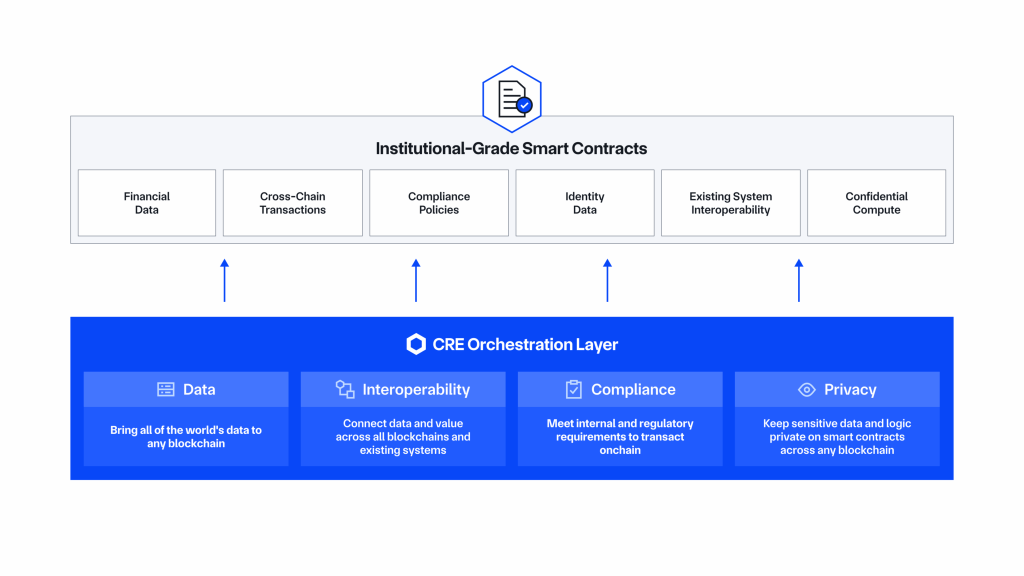
The emergence of CRE is a significant milestone. CRE is seen as an orchestrator for smart contracts. They link blockchains, data sources, and business systems under one roof. Developers now don’t have to focus on various integration efforts. It is all orchestrated through CRE.
The service offers support for compliance and privacy by design. It offers the opportunity for provable execution on public and private chains. It further offers simplification of blockchain complexity. The teams work on logic, not infrastructure.
CRE Powers Advanced Onchain Use Cases
It is to be noted that CRE is already supporting sophisticated use cases. Examples of use cases that CRE is supporting include tokenized assets, delivery-versus-payment settlements, and automated reporting. Large banks and payment networks use CRE in production projects. Providers of cloud infrastructure also work to connect Web2 systems with on-chain processes.
Traditional finance presses forward with on-chain integration. Tokenization holds the promise of efficiency and inclusion. Worldwide research suggests the transfer of tens of trillions worth of assets will move on-chain in the coming decade. Payment and settlement of these assets grow into the trillions.
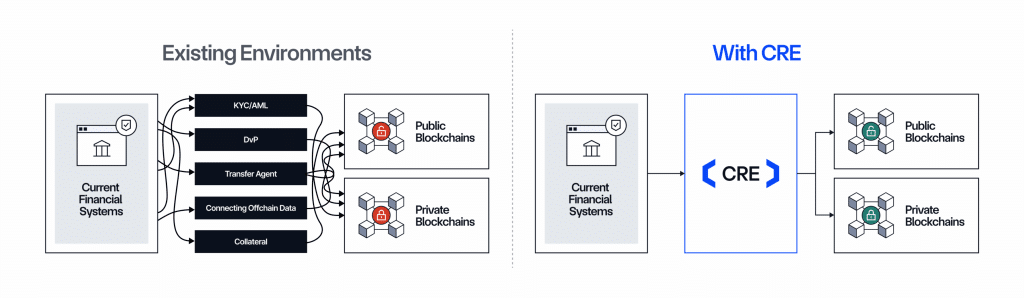
To achieve such scaling, the smart contract needs to undergo another evolution. The contract will have to be able to oversee data, compliance, and compatibility at the same time. CRE is working towards addressing such a need. CRE provides a single layer that enables institutional-level applications.
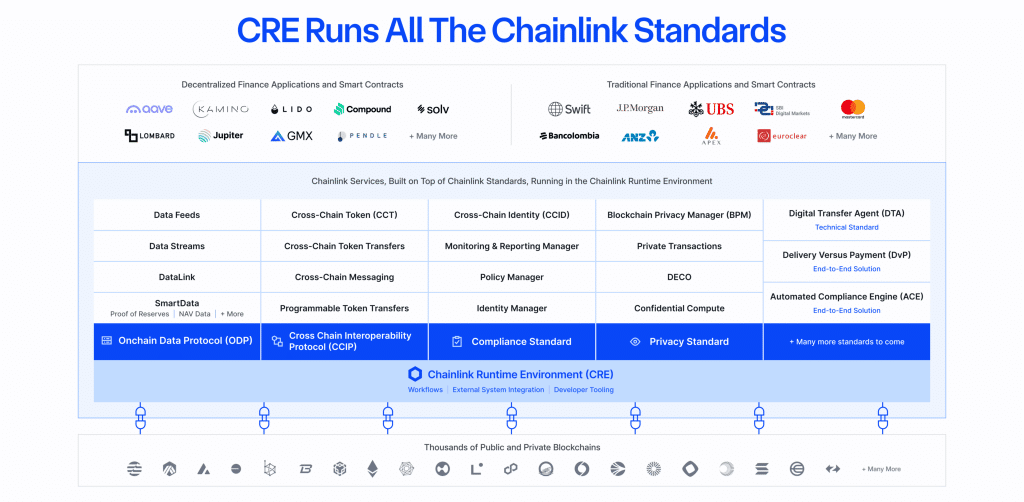
Through reduced friction, CRE promotes more assets and liquidity on-chain. CRE establishes a direct link between traditional finance and the decentralized space. It may drive the growth of the industry from trillions to hundreds of trillions. The future course of on-chain finance has already begun.
Related Reading: Bitcoin Nears 21 Million Cap as Miners Prepare for a Fee-Driven Future