Skip to content


- Chainlink launched a reserve to strengthen long-term network growth.
- New payment tools convert revenue into LINK automatically.
- Enterprise demand continues to drive steady Reserve expansion.
According to the blog, the Chainlink Reserve marks a strategic shift in how the network captures value and supports sustainability. The system focuses on turning real usage into long-term economic strength. It relies on growing demand from enterprises and on-chain users.
The goal centers on building a durable foundation for the Chainlink Network as adoption rises across finance and blockchain infrastructure. The Chainlink Reserve collects LINK generated from real revenue. It draws funds from off-chain enterprise payments and on-chain service usage.
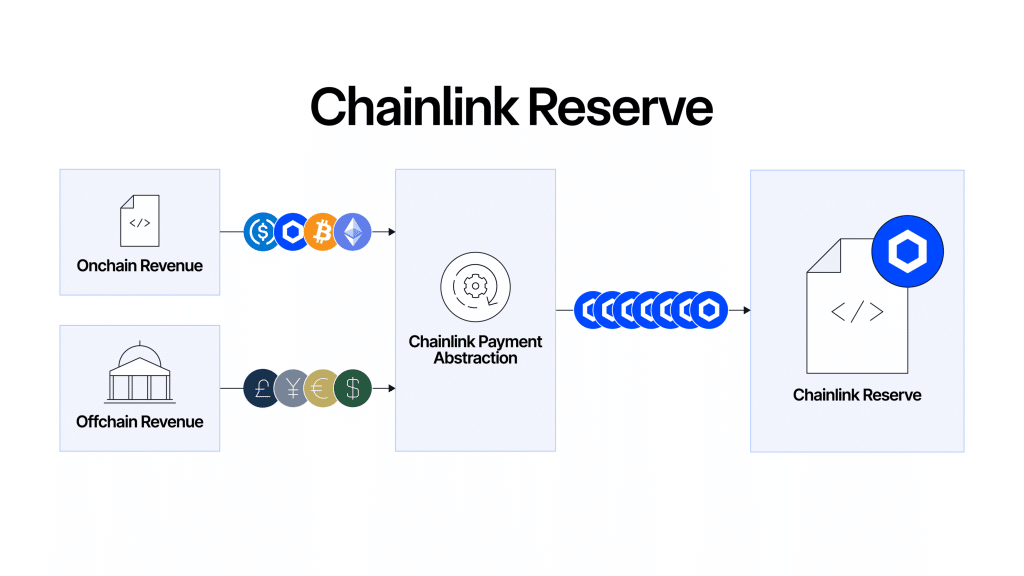
Many large institutions already rely on the Chainlink standard. They often pay off-chain for access, support, and maintenance. That demand has produced hundreds of millions of dollars in revenue so far. The Reserve stores LINK as a strategic asset. It does not aim for short-term distribution.
Chainlink Reserve Passes One Million Dollars in LINK
The project expects no withdrawals for several years. This approach allows the Reserve to grow steadily over time. Early results show more than one million dollars in LINK already accumulated. Growth should continue as more revenue flows into the system.
Chainlink also increased transparency. A public dashboard now tracks Reserve activity. Users can view balances, supply data, and contract details on Ethereum. This visibility supports trust and accountability across the ecosystem.
Payment abstraction plays a central role in reserve growth. This on-chain infrastructure removes payment friction. Users can pay for Chainlink services using gas tokens or stablecoins. The system then converts those payments into LINK automatically.
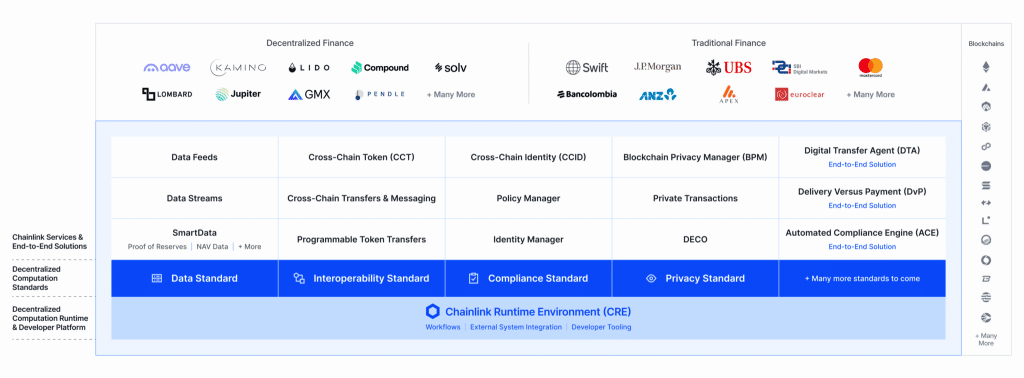
The latest upgrade expanded payment abstraction beyond on-chain fees. It now supports off-chain enterprise payments as well. This change connects a wider revenue base directly to the Reserve. Both usage-based fees and enterprise contracts now flow through a unified process.
Chainlink Builds Modular Systems for Institutional Use
Several Chainlink services power this system. CCIP gathers fees from many blockchains onto Ethereum. Automation triggers conversions without manual steps. Price feeds guide fair exchange rates. Uniswap V3 handles the initial swaps due to strong liquidity. More exchanges may join later to improve efficiency and protection.
The Reserve contract includes a built-in delay for withdrawals. This adds another layer of security and governance control. Chainlink holds a strong position in the oracle market. Its price feeds secure tens of billions in value across dozens of blockchains. The platform has expanded beyond data delivery.
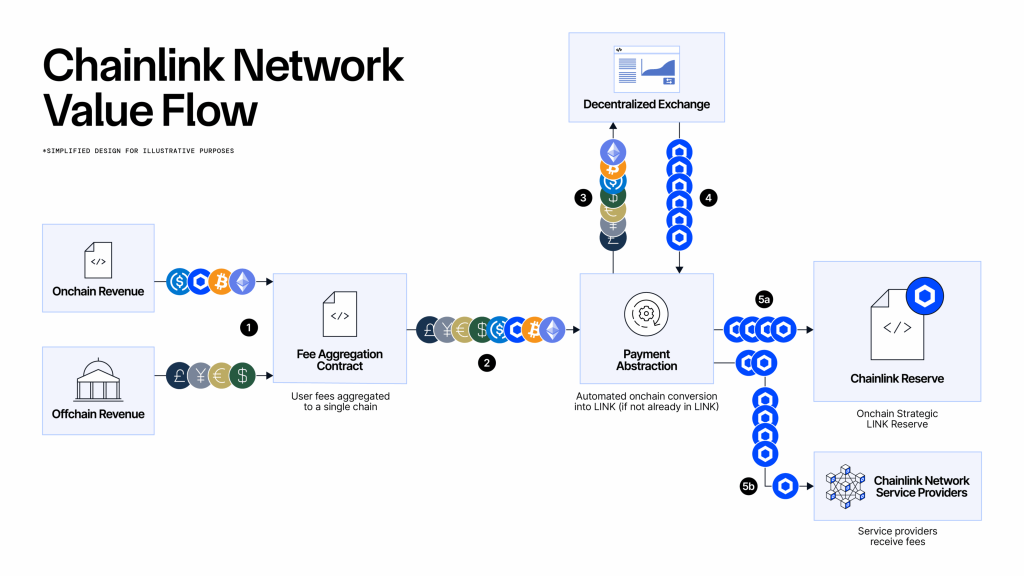
It now supports cross-chain activity, compliance tools, and legacy system connections. This modular design helps institutions build complex applications with ease. It reduces reliance on fragmented service providers. As asset tokenization grows, demand for Chainlink services should rise further.
That demand links directly to Payment Abstraction and the Reserve. The Reserve complements existing economic pillars. These include growing user fees and lowering operating costs. Together, they aim to create a stable and sustainable Chainlink Network for the years ahead.
Related Reading: