Skip to content


- In 2024, $649 billion in stablecoins went to high-risk blockchain addresses, representing 5.14% of total stablecoin transactions.
- Online gambling using crypto grew 17.5%, reaching $217.8 billion.
- Fraud and money laundering with crypto reached alarming levels, prompting stronger regulation and enforcement.
The year 2024 marked a turning point in crypto crime. Blockchain technology saw broader adoption, but so did illegal activities using it. Criminals shifted more operations onto decentralized platforms, leveraging anonymity to move funds faster and more discreetly.
High-risk addresses have recorded over $649 billion in stablecoin payments, according to Bitrace’s recent report. The figure represents 5.14% of 2023’s stablecoin activity but was slightly lower than 2023’s level but increased nonetheless, reflecting the continuation of illicit activities.
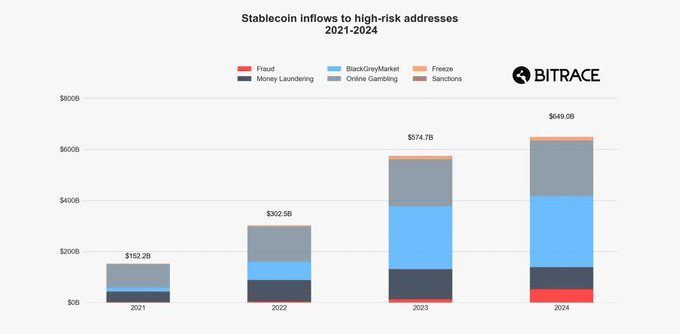
USDT on TRON was still the cryptocurrency of preference in illicit activities during 2021-2024. More malicious activities were also carried out using Ethereum stablecoins. Larger illicit activity using USDC, notably in gambling, demonstrated that regulated coins are also not immune to abuse.
USDC Gains Ground in Online Gambling
The crypto gambling industry involving stablecoins expanded by more than 17.5% in 2024, reaching $217.8 billion. The TRON and Ethereum networks again topped these lists. USDC usage in this sector rose spectacularly from 5.22% to 13.36% in a single year. Compliant actors distribute USDC, but today, gambling sites across the globe largely use the crypto asset. Additionally, illicit business practices remained consistently high.
Black and gray markets handled $278.1 billion in stablecoins, a further increment on past years’ increasing tendencies. Escrow service operators, such as Huione Guarantee, were more actively engaged in these activities. Such business provided a means to enable illicit transactions by establishing confidence between parties who were anonymous to each other.
It was also fueled by increased fraud. Scammers targeted blockchain addresses, earning $52.5 billion in 2024, a figure greater than cumulative totals from all past years combined. Authorities largely attributed the dramatic rise to an increase in reported cases and heightened monitoring. However, more sophisticated methods of cryptocurrency fraud also contributed.
Although money laundering activity decreased somewhat, it remained substantial. Illicit addresses laundered $86.3 billion worth of stablecoins. Regulation measures and compliance enhancements cut this down from 2023 levels, but the dangers aren’t far behind being an issue.
Crypto Crime Falls as Regulations Tighten
Despite increased cryptocurrency illicit activities, increased controls were already making a growing contribution. In Hong Kong, regulators were already enforcing clearer rules, leading to real-world consequences. Following Q3 2023, top-risk stablecoin inflows by entities catering to customers from Hong Kong were significantly lower.
Firms like Circle and Tether froze illicit assets worth $1.3 billion globally, more than double the total from the previous three years. Inflows from entities sanctioned since 2022 also steadily declined.
This demonstrates that collaboration between industry players and regulators can drive positive change. The cryptocurrency landscape is evolving. Risks remain, but the way to a more secure online economy becomes more apparent.
Related Reading: “Bitcoin and Ethereum Lead $3.4 Billion Crypto Investment Surge: Weekly Record Update”