Skip to content


- Microsoft has taken legal action to disrupt Lumma Stealer malware, blocking thousands of related websites.
- Lumma Stealer targets personal and organizational data, causing financial and operational harm worldwide.
- Collaboration with global law enforcement aims to reduce the malware’s impact and prevent future attacks.
Microsoft announced strong legal measures to stop the Lumma Stealer malware. This harmful software steals sensitive information like passwords, credit card details, bank accounts, and cryptocurrency wallets. Cybercriminals widely use it to commit fraud and disrupt services.
The Digital Crimes Unit at Microsoft spearheaded the action against the malware’s infrastructure. They obtained a court order in the United States through which they were able to block approximately 2,300 malicious websites related to Lumma.
The U.S. Department of Justice also got involved and seized command centers behind the malware. Europol and other Japanese agencies assisted in severing local servers. Microsoft also identified close to 400,000 infected computers running on Windows worldwide in a two-month period.
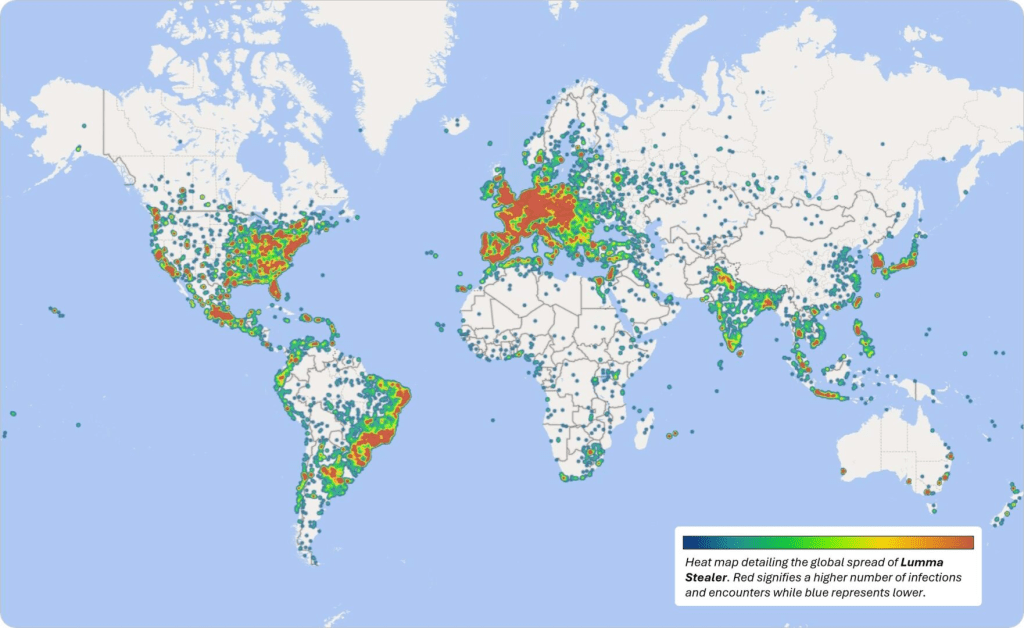
They aimed at disrupting communication between malware and these compromised devices. Microsoft took down or redirected over 1,300 domains affiliated with Lumma to servers it controls. This allows Microsoft to collect information and enhance security and defend customers.
Microsoft Exposes Lumma’s Latest Phishing Scam
Lumma Stealer malware has also found ways of being sold on dark web forums on an as-a-service basis. Its authors later released enhanced variants from 2022 targeted at evading detection and doing even more harm. It can also spread rapidly and may masquerade as popular brands such as Microsoft as a way of misleading victims.
They spread it through tactics such as malicious ads and phishing emails. After installation, Lumma steals data for financial gain or to facilitate other web attacks. Recently, Microsoft identified a phishing attack impersonating a travel reservation site as an example.
The attack used Lumma and other malware to take over credentials and conduct financial fraud. The malware also targets education, gaming forums, and sensitive areas such as healthcare, telecommunication, and manufacturing. It threatens because it has spread and has versatility.
Collaboration Is the Key to Combating Cybercrime
The action against Lumma Stealer exemplifies the benefits of worldwide coordination. Microsoft engaged the security and law enforcement agencies around the world to take down the malware operation. Redirecting the compromised websites allows researchers to monitor and share information about the active threat.
This makes both the government and private sectors able to respond quicker to emerging attacks. The collaborative effort is able to slow down the cybercriminals, take away their profits, and protect millions of consumers from damage. By disrupting key aspects of Lumma’s operation, Microsoft and their counterparts make it harder for attackers to execute successful attacks.
This measure is a warning signal for those perpetrating the cyberattacks that they will be dealt serious repercussions. The vigilance and cooperation ongoing will be imperative in making the digital space secure from such malware. The move by Microsoft is a strong step toward making cyberspace secure from one of the most dangerous and pervasive malware utilities in recent times.
Related Reading: Bitcoin Price Faces Resistance as Bearish Signals Emerge