Skip to content

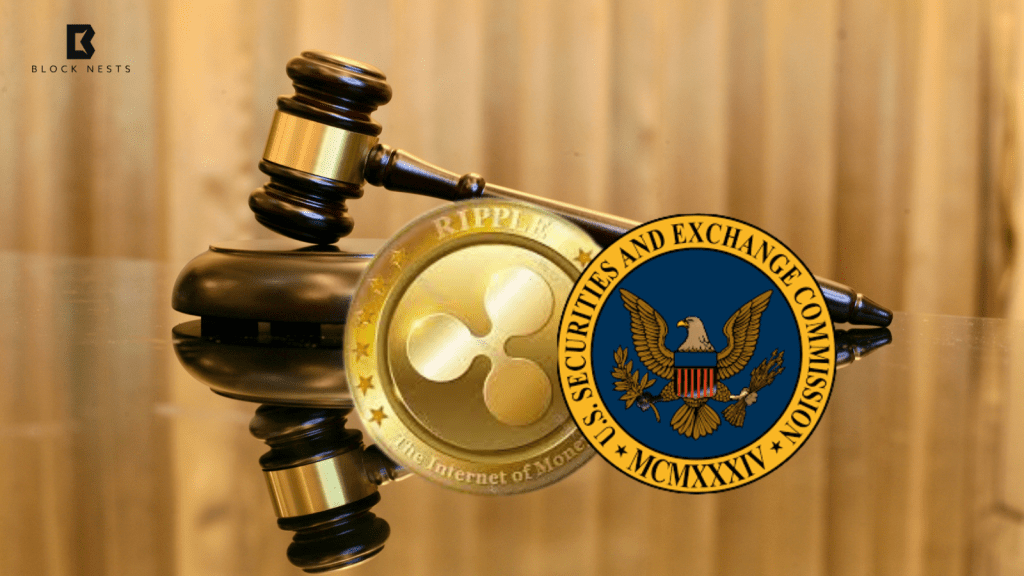

- The Ripple vs. SEC case could shift dramatically if classified documents reveal XRP’s role in U.S. financial systems, triggering national security considerations.
- Judge Torres denied the SEC’s requests to lift the XRP institutional sales ban and reduce Ripple’s $125M fine, maintaining legal pressure.
- XRP’s future as a key asset in the U.S. digital economy remains uncertain amid delayed ETF approvals and ongoing regulatory hurdles.
The high-profile legal battle between Ripple Labs and the U.S. Securities and Exchange Commission (SEC) may be on the verge of a dramatic shift, one that could redefine the future of XRP and the broader crypto landscape. Recent developments suggest that if government secrets or national security concerns emerge during the case, Judge Analisa Torres might have to reconsider her earlier rulings, potentially profoundly altering Ripple’s trajectory.
Judge Torres recently denied the SEC’s motion to lift the existing ban on institutional sales of XRP and rejected requests to reduce Ripple’s hefty $125 million fine. These decisions have kept XRP’s market momentum constrained and clouded the prospects for regulatory clarity. Should the SEC face a second denial, Ripple may be compelled to file a cross-appeal, prolonging litigation and delaying anticipated milestones such as the approval of XRP spot exchange-traded funds (ETFs).
Ripple could trigger US Treasury and Fed intervention
Crypto analyst Ashley Prosper, a prominent voice in the space, highlighted an intriguing legal possibility: while the court is unlikely to reverse decisions due solely to external pressures, the emergence of official government documents or classified information linking XRP to national interests would mandate judicial reconsideration.
#XRP #XRPCommunity
— Ashley PROSPER (@AshleyPROSPER1) May 21, 2025
What Could Force Judge Torres to Vacate her Judgment?
🔒 A. Classified or Confidential Federal Interest
If either the SEC or Ripple presents sealed evidence (e.g., ex parte communications from the U.S. Treasury, Fed, or DOJ), Judge Torres would be required to…
For instance, imagine a scenario where the U.S. Treasury issues an order or report revealing XRP’s integration into a nascent digital reserve system. Alternatively, internal Federal Reserve documents, such as those related to the FedNow payment infrastructure, might imply that XRP is earmarked for a strategic role in U.S. payment networks. Moreover, the Department of Justice (DOJ) could intervene, arguing that the ongoing lawsuit threatens the stability of America’s financial system or jeopardizes sensitive foreign relations.
In such cases, courts are legally obligated to prioritize national security concerns above other considerations, potentially leading to a major overhaul of the case.
Beyond the courtroom, there’s speculation that major federal institutions like the U.S. Treasury or Federal Reserve could formally step into the fray. If either entity submits a legal brief or directly advises the court that XRP plays a vital role in the country’s future financial infrastructure and that continuing the lawsuit is detrimental to the public interest, this could trigger sweeping changes.
These changes might include lifting the ban on XRP institutional sales, reducing or rescinding penalties, or even dismissing the case entirely. While such government involvement in financial litigation is rare, history shows it can occur during periods of financial crisis or national security concerns.
Ripple positioned for major role in US digital economy
If XRP is indeed becoming integrated into U.S. financial systems at a structural level, this ongoing legal battle could be laying the groundwork for a far larger paradigm shift. New revelations or government backing could swiftly elevate XRP’s status, transforming it from a contested digital asset into a cornerstone of America’s evolving digital economy.
Meanwhile, regulatory hurdles continue to stall XRP’s broader adoption. The SEC recently postponed its decision on 21Shares’ application for a spot XRP ETF, following similar delays for Franklin Templeton and Bitwise. Bloomberg analyst James Seyffart predicts that approvals for crypto ETFs, XRP included, are unlikely before late June or early July. Realistically, these approvals might not materialize until early 2025, prolonging uncertainty for investors.
Related | XRP Futures Launch on CME Sparks ETF Optimism and Institutional Interest
How would you rate your experience?