Skip to content


- Interoperability now drives the success of institutional tokenization.
- Fragmented blockchains and legacy systems slow onchain finance growth.
- Chainlink presents a unified standard for global on-chain finance.
According to the blog, global finance is entering a decisive transition. Assets, payments, and market infrastructure continue moving on-chain. As hundreds of public and private blockchains emerge, institutions face rising complexity. Chainlink provides reliable oracles and data solutions that help streamline operations across these networks.
They need to integrate these new blockchain networks with existing financial systems. This need has driven interoperability to the very top of their priorities. The potential value of tokenized assets is 30 trillion dollars.
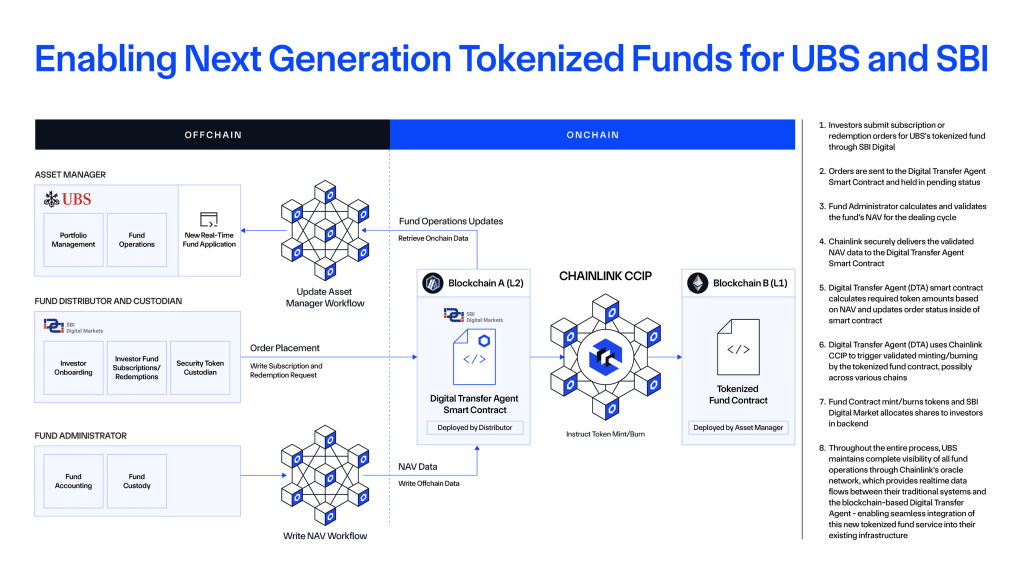
Some major financial institutions are already conducting tests on the use of blockchain technology in ledgers and settlement systems. Tokenization, on the other hand, will allow faster settlement, programmable assets, and new products. However, scalability still proves to be an obstacle. Isolated blockchains hinder scalability.
The current landscape of blockchains lacks unity. All blockchains have their own set of rules, standards, and governance structures. Separate networks continue to silo liquidity. There are now versions of assets across separate networks.
Chainlink Connects Legacy Systems to Blockchains
However, at the moment, institutions have experienced problems in managing risks and maintaining efficiency at scale. Observers have also noted that the transition between chains, which represents the most basic function, has not helped solve these problems.
In the absence of such standards, there are risks for each bridge. This issue is addressed with the shared interoperability layer enabled by Chainlink. This infrastructure can enable secure cross-chain transfers.
This framework will provide the basis for the avoidance of fragmentation and the promotion of efficient circulation. There are already pilot programs, under the auspices of regulation, which have shown the way that funds, which are tokenized, can operate across multiple blockchains. However, the traditional finance systems remain a part.
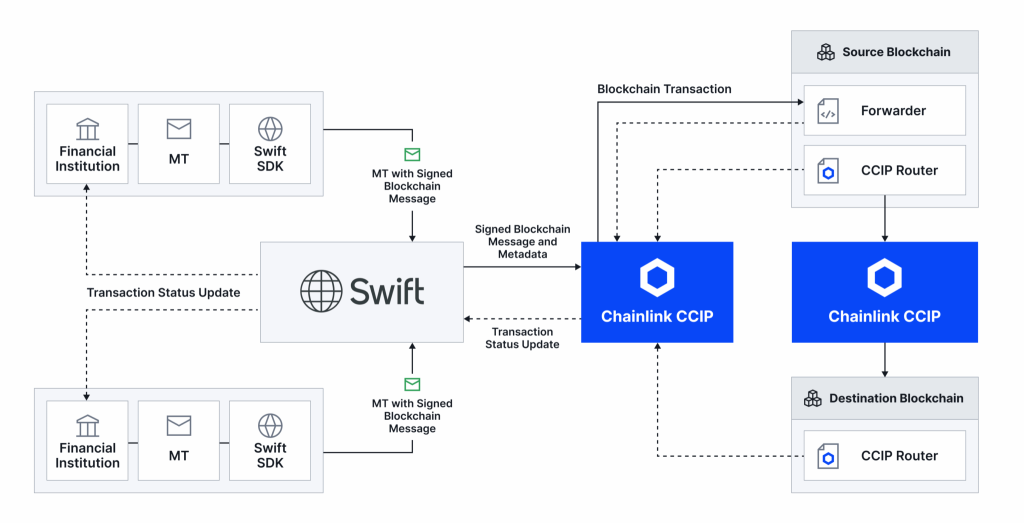
For example, banks handle trillions daily. They provide the much-needed stability and trust that have been built over many decades. It will need to communicate with them, but it will do it without replacing them. Most of them weren’t created with blockchain integration in the first place. For many, custom integration can be slow and error-prone.
This would be an opportunity to use something standardized. It would allow legacy systems to communicate with the blockchain through standardized messaging. Chainlink would facilitate this.
Interoperability Drives Institutional On-Chain Adoption
Currently, this capability is being explored by financial entities for streamlining their own processes for managing corporate actions and distribution of data. This will ensure seamless integration of tokenized assets with existing systems, thereby increasing their overall rate of adoption.
Institutional transactions involve many factors beyond mere connectivity. The demands for correct data, legal compliance, and privacy come up. The pricing factors, identity verification, and jurisdictional compliance are involved.
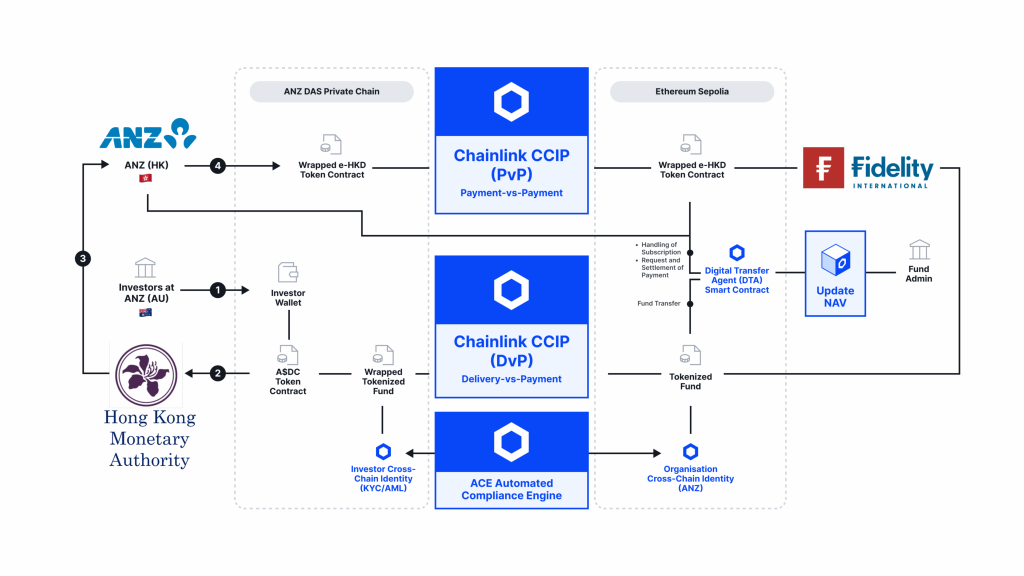
Chainlink has a combination of trusted data delivery, automated compliance, and privacy. This allows institutions to have compliance while at the same time carrying out cross-chain transactions. The features have been tested by the central banks, together with the regulators. The orchestration complements the interoperability.
There are different chains, systems, and stages in the workflows of institutions. Chainlink integrates these with unified execution logic. There are funds transferred, checks initiated, and synchronizations performed. As the financial systems move further onto the blockchain, success will be measured.
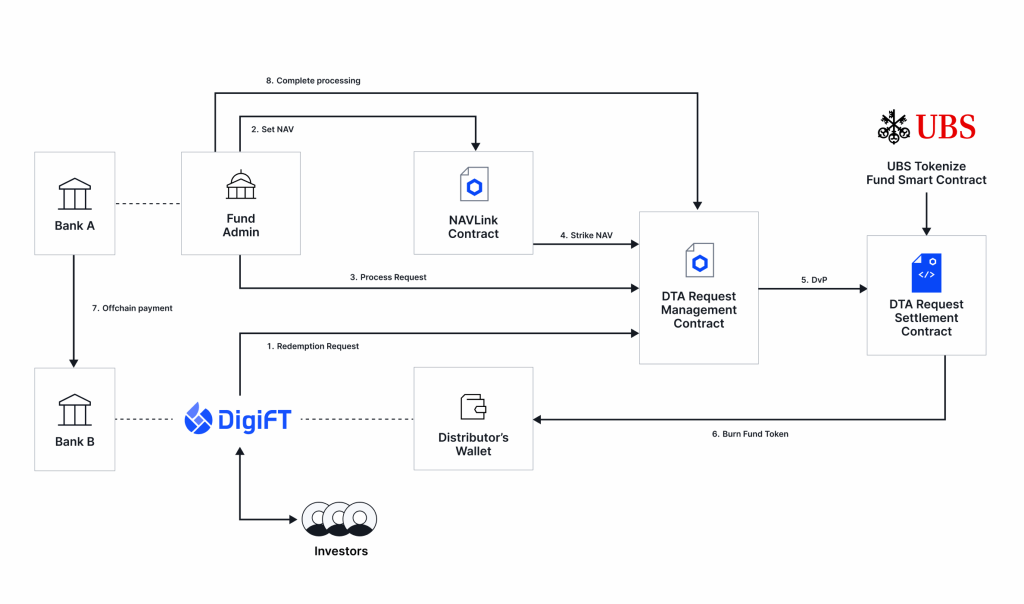
There needs to be a single standard that can accommodate everything. Chainlink views itself as the single standard that can accommodate everything. Chainlink aims to enable a scalable, secure, and regulated on-chain finance on a worldwide scale.
Also Read: Bitcoin Open Interest Plummets as Binance Dominates—What’s Behind the Shift?