Skip to content

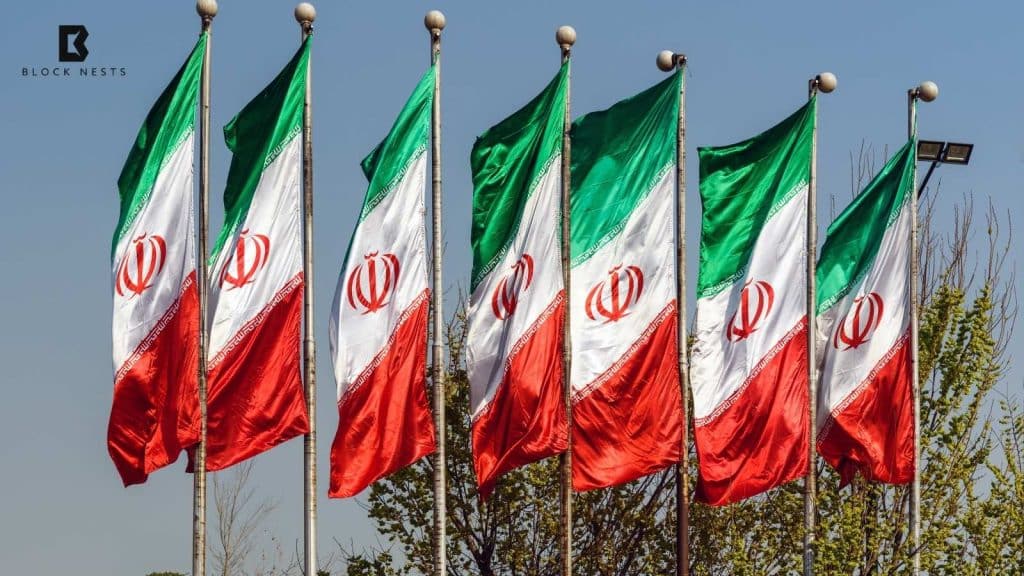

- Iran opens crypto payments for missile and warship exports globally
- Sanctions push Iran to offer currency options in arms deals
- Mindex signals readiness to sell weapons using crypto or barter
Iran is adjusting its defense export framework as sanctions continue to constrain traditional financial channels. The Financial Times reported that the country has begun accepting cryptocurrency payments for the sale of weapons.
At the center of the shift is the Ministry of Defence Export Center, known as Mindex. Military contracts abroad are controlled by the state-owned exporter, with business ties established in 35 countries.
Instead of relying solely on banks, Mindex permits flexible settlement schemes. Besides, the agency facilitates payments in digital currencies, barter trade, and Iranian rials.
Also Read: Lighter Introduces LIT Token Amid Strong Growth and Expansion Plans
This approach was introduwas025 and represents an act of mounting economic pressure. Iran is therefore still experimenting with other options to keep the arms exports going despite the banking sanctions.
Mindex believes that sanctions do not impede execution. However, contracts are not stopped, as it is reported on their website. It has a diverse export base in military equipment, which includes ballistic missiles, rockets, ammunition, naval vessels, and hovercraft systems.
Sanctions pressure drives alternative payment methods.
Western governments are still increasing sanctions against Iran’s missile programs, oil industry, and access to banking. The U.S., UK, and EU have in place policies that tend to curb foreign trade exposures.
Because traditional financial channels remain blocked, non-traditional settlement tools are becoming increasingly popular in Iran. Therefore, cross-border transactions are now supported by the barter trade and digital assets.
Recently, the U.S. government imposed penalties on 29 Iranian-related oil ships under covered exports. The action also reduced Tehran’s access to formal trade facilities.
In this context, cryptocurrencies offer an effective workaround. Additionally, digital assets enable transfers without the need for intermediaries, whom enforcement procedures can target.
Crypto use extends from oil to the arms trade.
The application of cryptocurrencies by Iran for defense exports is not the first instance of their use. The U.S. Treasury found that Iranian nationals were involved in over $100 million in crypto-linked oil transactions.
Those actions were reported to have taken place between 2023 and 2025. According to officials, they were in a larger financial shadow network.
Exporting weapons with the use of similar mechanisms is in line with that strategy. Accepting crypto payments limits the use of correspondent banks that are vulnerable to sanctions. Nevertheless, the governments are still improving blockchain surveillance. Thus, there is an increasing amount of scrutiny of crypto transactions linked to sanctioned bodies.
In Iran, flexible payment offers sustain demand. Additionally, buyers with their own limitations may be interested in alternative settlements. Mindex focuses on reliability, although it is restricted. On its site, deliveries are made immediately after contracts are concluded.
The analysis reveals the impact of sanctions on transforming the behavior of the global arms trade. Iran modifies payment structures rather than halting exports. As the financial pressure increases, alternative settlement models can grow. In the meantime, Mindex indicates that it is willing to negotiate under changing limits.
Also Read: Privacy-Focused Cryptocurrencies Shine Amid Market Struggles
How would you rate your experience?