Skip to content


- Stablecoins offer a 4-5% premium over traditional bank transfers.
- Money changers exploit USDT for faster, cheaper remittances in India.
- Regulatory ambiguity surrounding stablecoin remittances remains a concern.
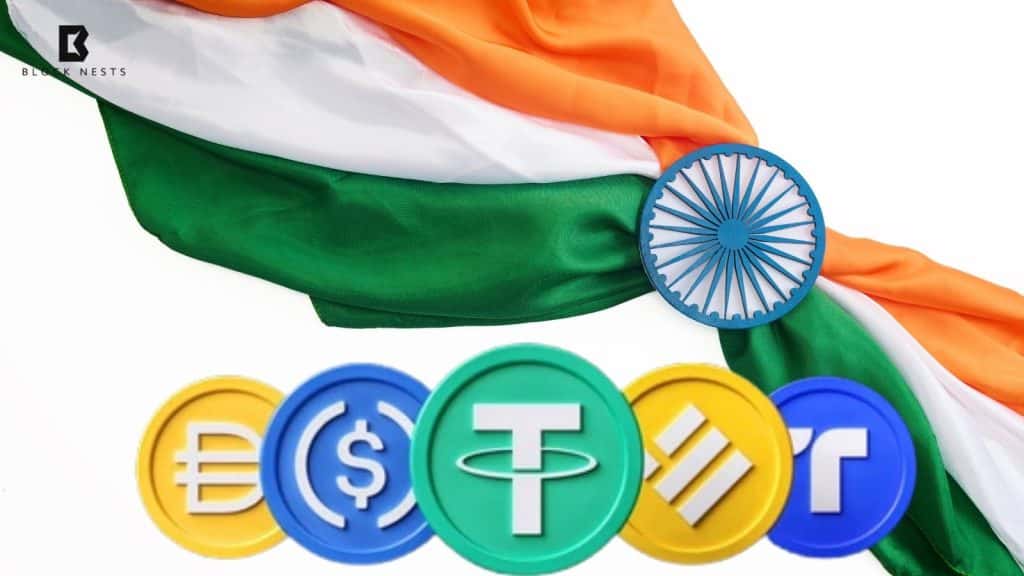
Recent news has shed light on the increasing trend of Indian employees overseas using stablecoins, particularly USDT, to remit money back home. The last two months have seen a significant portion of funds being transferred by foreign employees to change their route to stablecoins, rather than conventional banking channels. This is mainly justified by the fact that USDT will fetch a premium in India, as the currency trades at a 4-5% higher rate than the official rate between the INR and the US dollar.
As of now, the USDT is being exchanged at around ₹93 per coin in India, whereas the official INR-USD rate spots at ₹88.6. This discrepancy puts a distinct financial benefit on senders. As an illustration, when $1,000 is sent through standard bank transfers, it becomes ₹88,600. Nonetheless, ₹93,150 can be obtained by using USDT bought overseas and exchanged in India. This is an excellent advantage to remittance senders, where the difference is more than ₹4,500.
Also Read: Strategy Inc. Announces EUR620M STRE Stock Issue to enhance Bitcoin Holdings.
The Role of Money Changers in This Trend
Money changers are exploiting this arbitrage deal. They purchase USDT in other countries and transfer it to India, bypassing the infrastructure of traditional financial systems. As soon as the recipient receives the USDT in India, they can swap it for INR at the increased domestic rate. There are even recipients who are using peer-to-peer networks or Telegram channels to evade the 1 per cent tax collected at source (TDS). Instead, they can sell USDT on local exchanges, paying the TDS, but receive a higher rate.
This is faster and less expensive than conventional bank deposits. Remittance service providers and money changers have taken advantage of this and made even more money. Customers, in turn, will be able to transfer more money to their families at reduced cost.
Regulatory Ambiguity and Market Growth
Stablecoins are still in their infancy, and their usage as remittances is still under regulatory scrutiny. In certain jurisdictions, money transmitters are permitted to transact in both fiat and stablecoins. India, however, has yet to clarify its regulatory position. Nevertheless, the demand for USDT in India is on the rise. This has been driven by the fact that it is used to hedge the crypto market and offshore betting.
Although this change has yet to disrupt the traditional remittance channels, the number of stablecoin transactions is predicted to increase. It is likely to redefine the future of remittance services.
Also Read: Spanish Influencer Álvaro Romillo Jailed Over Alleged $300 Million Ponzi Scheme.
How would you rate your experience?