Skip to content


- New U.S. law boosts traditional banks’ interest in stablecoin services.
- Citigroup explores custody, payments, and conversion for stablecoins.
- Potential services could reshape payment speed and market competition.
A recent law passed by Congress is pushing large financial institutions to explore opportunities in the stablecoin market. The change allows stablecoins to be used more broadly for payments and settlements, provided issuers hold secure assets like U.S. Treasuries or cash as backing. This shift opens a significant space for banks to act as custodians for those reserves.
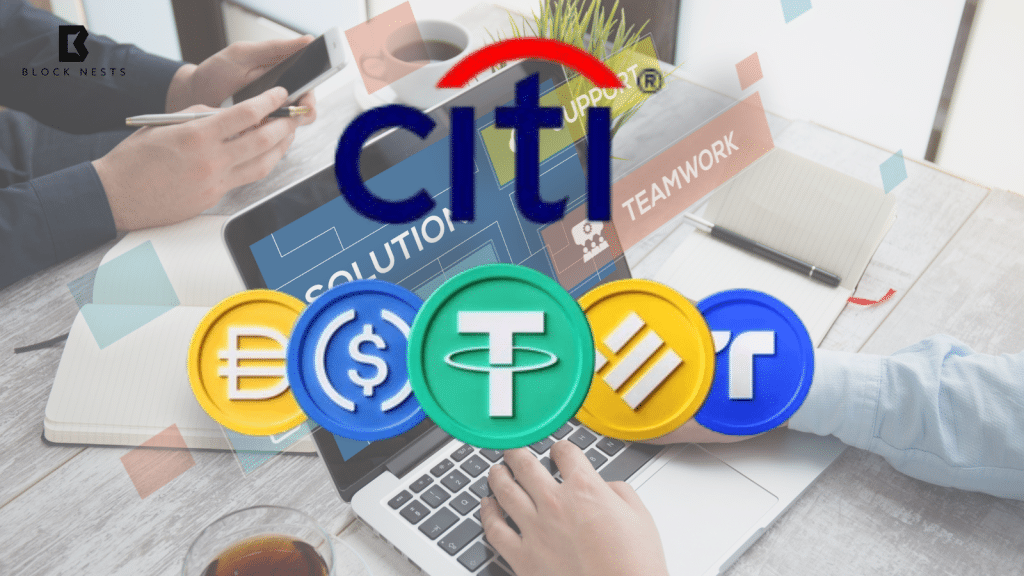
Citigroup is one of the companies testing out this new path. The bank perceives opportunity in hosting safekeeping of the assets underlying stablecoins. It already provides treasury, cash management, and payments to big companies in its services department, so custody comes as a natural extension. Other large companies, such as Bank of America and Fiserv, are exploring entry into this market.
Stablecoins continue to be largely associated with cryptocurrency trading, but the new regulations may enable them to become everyday payment instruments. Issued stablecoins currently have a market value of $250 billion, but analysts project the new regulations to increase the value sharply.
Citigroup Explores Stablecoin Payment Systems
Citigroup is not limiting its scope to custody alone. The bank is also considering stablecoin payment systems and instant conversion to dollars. Current international payments can take days to process, but stablecoin transactions could move funds in seconds.
The bankcurrently runs tokenized U.S. dollar transfers via a blockchain network, enabling transfers between New York, London, and Hong Kong accounts at any hour. That model could be expanded to stablecoins to facilitate faster and less expensive cross-border transactions for corporate customers. Beyond stablecoins, Citi has plans to offer custody for digital assets tied to crypto investment products.
This would encompass assets underlying exchange-traded products that trace the value of bitcoin. With products such as BlackRock’s iShares Bitcoin Trust sitting on tens of billions in assets, safe custody continues to be necessary. Presently, Coinbase has a monopoly in this area, controlling over 80% of the share of the custodianship of crypto ETFs.
Compliance Key as Banks Move Toward Crypto
Even as the U.S. takes a more open stance toward crypto, traditional financial firms must navigate existing regulatory requirements. Compliance includes anti-money laundering checks, currency controls for cross-border transfers, and strong cybersecurity measures.
Citigroup requires assets on deposit in custody to be verified to be of bona fide origins. The bank is also in the process of reinforcing systems to prevent theft and operational failure. An in-house stablecoin remains researched, but there has been no launch decision.
As legal and technical foundations fall into place, the stablecoin market can potentially attract more involvement from major world banks. That could redefine competition, speed up payment flows, and increase crypto’s share in everyday economic activity.
Related Reading: Metaplanet Buys $61.4M in Bitcoin, Boosting Holdings to Over 18,000 BTC
How would you rate your experience?