Skip to content



- Bitcoin exchange reserves keep falling as institutional demand absorbs supply
- CryptoQuant data shows long-term holders tightening available Bitcoin market liquidity
- Institutional players drive Bitcoin scarcity as exchange balances hit record lows
Bitcoin is witnessing a stage where supply in the exchange keeps reducing constantly as both institutional and retail markets show signs of active demand. According to CryptoQuant data, the reserves on exchanges are at multi-year lows, which supports the idea of tightening liquidity. Meanwhile, Bitcoin price has been resistant around the $77,000 mark, which indicates an increasing discrepancy between supply and demand in the long run.
CryptoQuant analyst Sunny Mom speculated that the exchange inventory has been steadily falling since 2023, a pivotal point in the dynamics of Bitcoin supply in global markets. The analyst indicated that, the reserves, both monthly and annually, are still in a declining trend with a few indications of reversal. This trend is therefore indicative of a continuous supply drainage and not a short-term change due to short-term market activity.
Also Read: South Korea Central Bank Pushes CBDC Expansion Under New Governor Plan
Recent short term data also confirm this trend, with the exchange balances decreasing almost 2.80 million BTC to about 2.67 million BTC in a relatively tight time span. In the meantime, the price action shifted upwards in this time, indicating that buyers are still consuming the supply that is available although trading platforms have decreased liquidity. This is going against the trend of declining reserves and increasing prices, implying that accumulation is still active and stable among various types of investors.
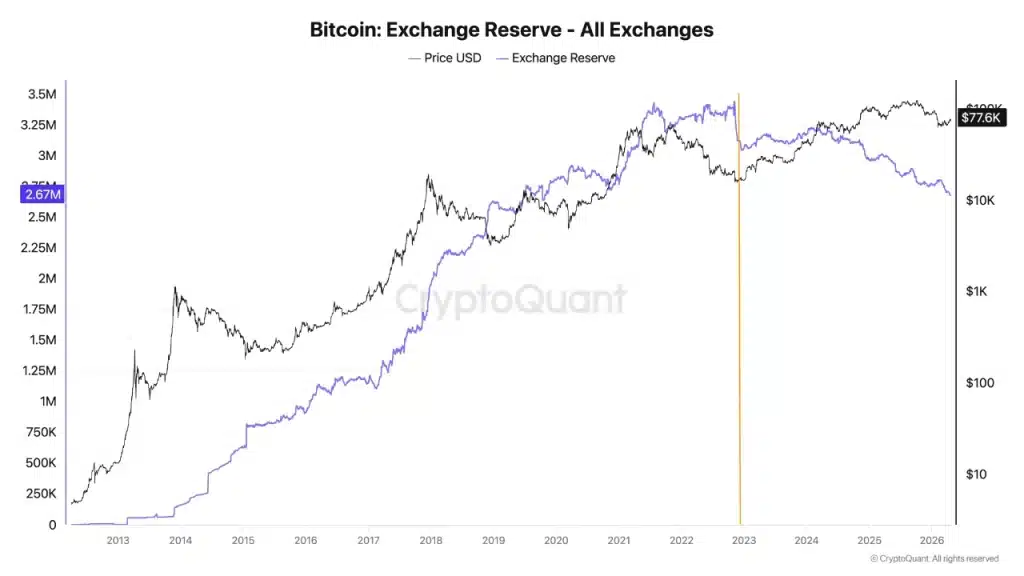
Also, long-term data will give the benefit of a larger picture of the structural change occurring in the Bitcoin market. Exchange reserves had reached a high of over 3.3 million BTC in the earlier market cycles with an indication of increased levels of liquid supply. Nevertheless, balances have consistently decreased in the last few years, and the pace has been significantly increasing since 2023, which means that Bitcoin is becoming less and less exchangeable and more of a long-term storage product.
Institutional Demand Accelerates Bitcoin Supply Drain
This dynamic supply trend still features institutional involvement, with large financial players growing their exposure to Bitcoin by investing in structured products. Sunny Mom reports that companies like BlackRock have received steady inflows in their spot ETF, which have increased pressure on demand over the years. Additionally, Strategy has been issuing debt papers to buy Bitcoin, which will further diminish the open markets supply in the market.
Moreover, large financial institutions are increasing access to Bitcoin investments by launching new financial products and services to a broader group of investors. Morgan Stanley unveiled a low-charge ETF which soon started to draw capital inflows, and Charles Schwab allowed millions of customers to trade directly in Bitcoin through its platform. Goldman Sachs has also gone a step further to develop Bitcoin covered call ETF plans, which provide further avenues to institutional exposure.
Market Structure Tightens as Liquid Supply Continues to Decline
These changes lead to a drop in exchange reserves since purchased Bitcoin enters custodial storage facilities that are not readily available to trade in the immediate future. Coins kept on such terms seldom come back to exchanges promptly, decreasing the amount of liquid in the market. Consequently, this has contributed to further tightening of liquidity in the market in general despite the active trading volumes in the international markets.
In addition, this change is an indication of a wider market structure change as Bitcoin ownership is slowly being concentrated in the hands of long-term holders and institutional investors who have long-term investment horizons. As a result, there are fewer coins available to make instant transactions, which further supports the continued supply depletion, as indicated by on-chain data trends. Nevertheless, even the short run price fluctuations are still tied to the wider economic factors such as the macroeconomic indicators and investor sentiment on the financial markets.
The supply drainage of Bitcoin is still accelerating with exchange reserves at new lows due to enduring institutional demand and long-term holding. This dynamic is gradually decreasing the supply of liquids, and it is forming a new stage in the market structure of Bitcoin.
Also Read: Coinbase Expands UK Crypto Loans With $5M Limit and Instant Access