Skip to content


- Chainlink launches a strategic LINK reserve to support long-term growth
- Payment Abstraction converts various payments into LINK for the reserve
- Strong enterprise demand positions Chainlink as core Web3 infrastructure
Chainlink has launched a new on-chain reserve, known as the Chainlink Reserve. This reserve is built to strengthen the long-term sustainability of the Chainlink Network. It works by collecting LINK tokens from various revenue sources, both on-chain and off-chain.
Chainlink will act as a financial pillar for Chainlink as it keeps growing its presence within the decentralized finance (DeFi) sector as well as the traditional financial space. It is among the major objectives of the reserve to help Chainlink’s growing ecosystem. The organization will increase the reserve incrementally with the help of a mechanism referred to as Payment Abstraction.
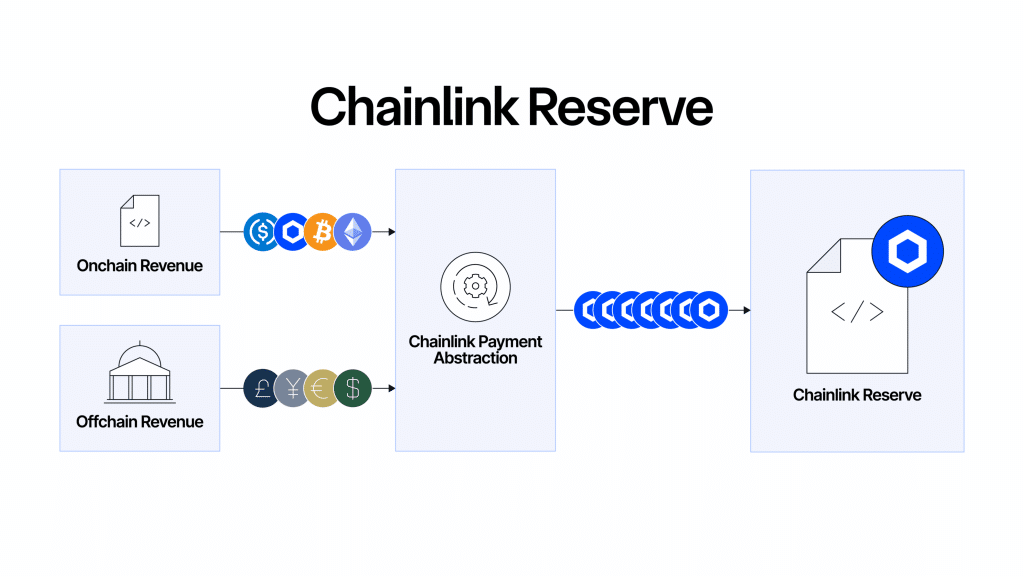
This mechanism helps convert payments, whether made in stablecoins, gas tokens, or other assets, into LINK tokens. These LINK tokens are then stored in the reserve’s smart contract. The design ensures minimal manual handling and offers automation through Chainlink’s own services like CCIP, Automation, and Price Feeds.
Reserve already has more than $1 million worth of LINK, and the sum continues to grow. That increase is the result of robust enterprise demand, as big institutions are paying this LINK for services via on-chain and off-chain routes. Those payment flows are channeled into the Reserve, creating a long-term asset pool to be left untouched for years.
Chainlink Converts Fees to LINK Automatically
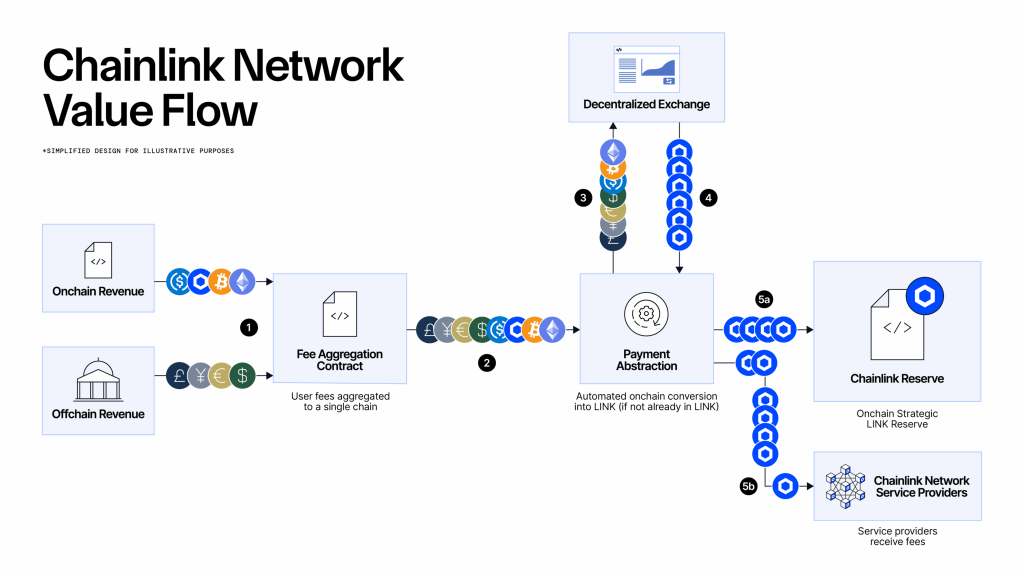
Payment abstraction plays a crucial role in building the Chainlink Reserve. It allows users to pay in a flexible manner, converting non-LINK tokens into LINK automatically. This process reduces friction, letting more users interact with this LINK services without having to hold LINK directly.
At first, this mechanism provided for payouts for particular Chainlink functions only. But now it has grown to include enterprise integration fees, service usage, and revenue from maintenance. Such payouts are aggregated and sent to a single chain with the help of CCIP.
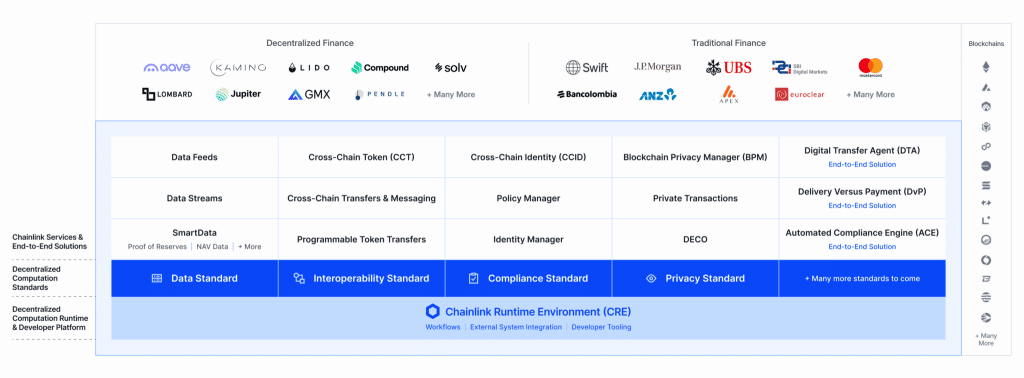
Automation tools then trigger conversion processes, whereas the price feeds enable proper valuations for each asset being traded into LINK. The architecture strength is scale. As the Chainlink services stretch across several blockchains by the dozens, with corporate customers, Payment Abstraction ensures every dollar of value entering the ecosystem will be convertible into LINK and added to the reserve.
Economic Blueprint Balances Growth and Efficiency
Chainlink Reserve complements the policies on the existing economy on the platform. The policies entail increasing the user fees alongside the decrease in operation costs. On the fees aspect, Chainlink receives revenues from enterprise contracts and payment for usage, alongside revenue-sharing with other protocols.
It complements this by further connecting future token payouts for nascent-stage projects with this LINK services. From the cost perspective, technical upgrades such as the Chainlink Runtime Environment (CRE) lower the load on infrastructure. The company is further optimizing backend flows to make the expenses more cost-effective.
These measures guarantee income entering the Reserve to back a slim, but scalable, network. By blending fresh revenue streams with an increasing reserve of LINK, Chainlink strengthens its role as a bedrock level within the tokenized economy.
Related Reading: Bitcoin Panic Selling: Short-Term Holders Exit at a Loss as Bull Trend Holds