Skip to content



- Stablecoins now act as the main liquidity layer in crypto markets
- Real-world use is rising across payments, remittances, and savings
- Regional demand shapes how stablecoins function in daily finance
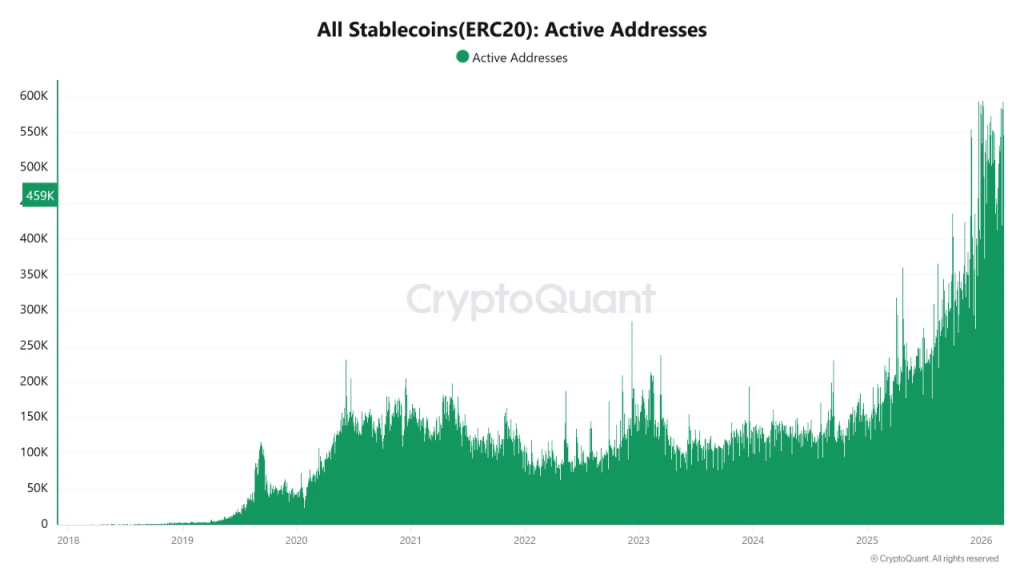
According to the data, stablecoins are moving beyond basic trading tools. They now form a core layer of on-chain finance. Blockchain activity shows strong growth in the number of users interacting with ERC-20 stablecoins.
This is a result of the demand for these assets. These assets are needed for more than just speculation. This is also a result of people needing a payment system, savings, and access to finance. The total market capitalization of stablecoins is nearly 300 billion dollars. This is a clear sign of integration into the digital economy.
Large assets, such as USDT and USDC, are at the forefront of the industry. These assets provide liquidity for decentralized exchanges. Traders use these assets for quick transactions. These assets are also needed for managing capital by institutions. Assets provide a variety of decentralized finance opportunities. These assets allow for quick and inexpensive payments.
Stablecoin Use Expands Across Global Markets
This flexibility makes them more important financial instruments. The data shows that there is a steady rise in transaction volume and wallet usage. This indicates that adoption is long-term and not based on hype. The adoption rate of stablecoins differs in various regions around the world.
In some nations that experience high levels of inflation, stablecoins have become a form of digital savings. People use them to keep their savings in a form that is backed by the dollar. This is evident in Nigeria. The country has a high rate of usage in daily transactions and remittances.
In Asia, stablecoins are widely used for cross-border payments and remittances, especially in countries like India and the Philippines. They help people send money home faster and at lower cost. In the United States, they are mainly used in financial markets, handling large transactions across exchanges and financial systems.
Stablecoins Bridge Traditional Finance and Blockchain
This role reinforces their position as a bridge between traditional finance and blockchain technology. The differences in the regions also underscore an important change. Stablecoins are responsive to the needs of the regions. They serve as savings vehicles, as well as payment and trading instruments. They do this simultaneously.
New regulatory systems are paving the way for stablecoins in developed countries. One such case is that of Japan. There have been important changes in the regulatory environment. These changes allow for the development of yen-based stablecoins. One such stablecoin is JPYC.
Stablecoins are linking traditional finance with blockchain. This shift shows rising trust in digital assets. Governments and institutions are exploring their use. They improve payment efficiency and enable smoother settlements. They also support innovation in digital banking and fintech. Stablecoins are becoming a core part of the financial system. They now go beyond trading and help drive global value transfer and broader economic activity.
Also Read: Strategy Continues Bitcoin Accumulation With 22,337 BTC Buy